
If you are struggling with chronic insomnia, low energy, or the frustrating cycle of feeling “wired but tired,” you know how profoundly poor sleep sabotages your life.
You might try every gadget, tea, and routine, yet the problem persists.
The truth is, quality sleep is not a passive state, it’s a carefully orchestrated hormonal event. When your hormones are out of balance, your body can’t perform its most critical task: deep, restorative sleep.
At New Beginnings Wellness, we look beyond surface symptoms to the complex hormonal signaling that controls your sleep-wake cycle.
The Hormonal Saboteurs of Sleep and Metabolism
When you can’t get quality rest, the problem is often rooted in hormonal chaos, and the fallout goes far beyond just feeling sleepy:
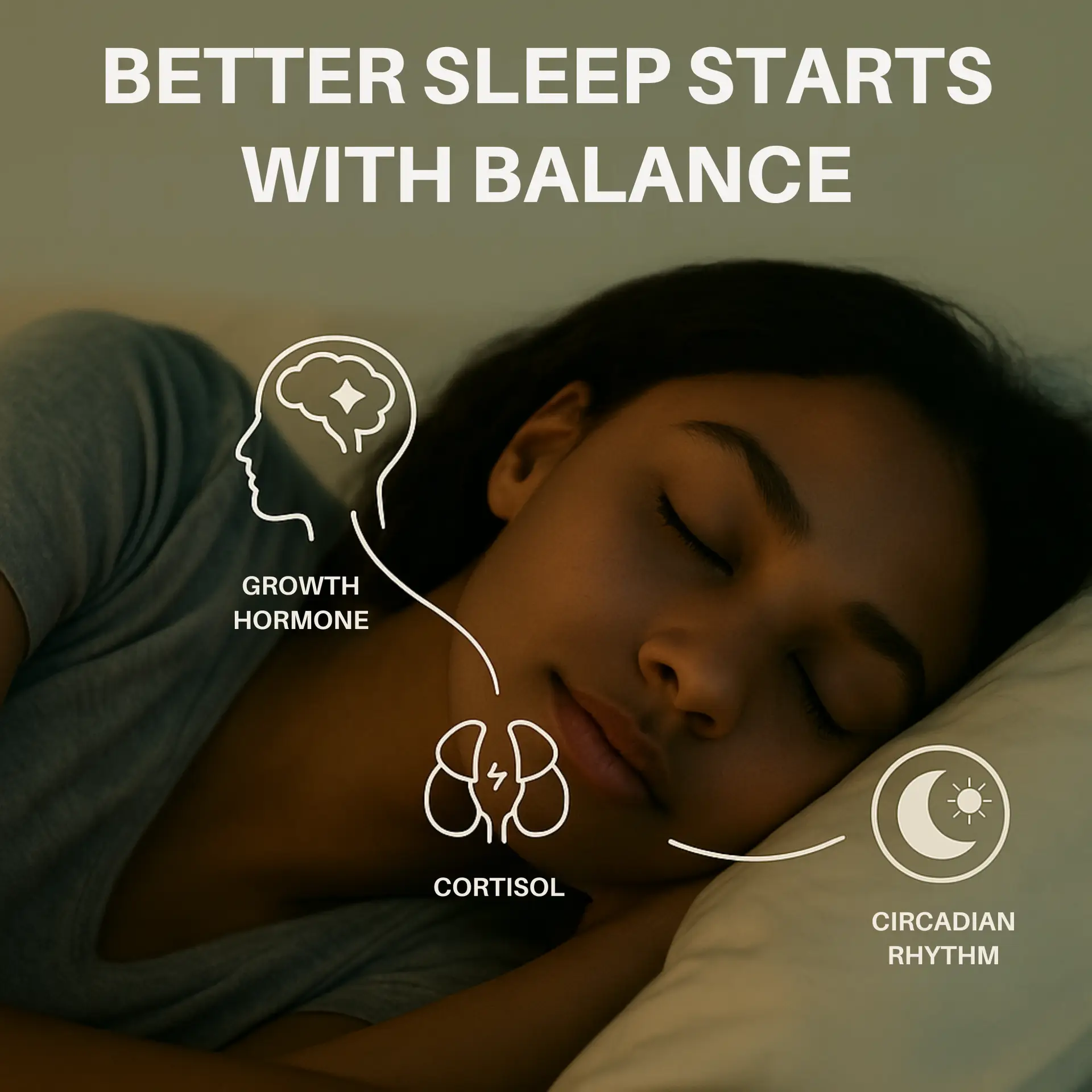
- Cortisol (The Stress Hormone): If chronic stress has your cortisol high at night, you feel “tired but wired.” This lack of downtime means your body is constantly in survival mode, which leads to abdominal fat storage and actively sabotages your body’s ability to burn calories.
- Growth Hormone (GH): Your body releases most of its GH during deep, slow-wave sleep, your most restorative phase. Low GH means your body misses out on crucial overnight repair. This leads to muscle loss, slower recovery from exercise, and a drop in overall vitality.
- Appetite Hormones (Ghrelin & Leptin): Just one night of poor sleep can cause a spike in hunger-stimulating Ghrelin and a drop in fullness-signaling Leptin. Translation? You wake up hungry, crave carbs, and feel less satisfied after a meal. Poor sleep literally makes you hungrier.
Deep Dive: The Two Phases of Sleep
To understand why this is so critical, remember that sleep has two main jobs: Non-REM (Deep Sleep) for physical and cellular repair (where GH is released) and REM Sleep for brain and memory processing. Poor sleep almost always sacrifices that deep, restorative phase first, which is why you wake up feeling physically drained, even if you were “asleep” for eight hours.
Peptides: Precise Signaling for Better Sleep
Peptide therapy offers a highly targeted, informational approach to disrupting this cycle. Think of peptides as tiny, highly specific signaling molecules that whisper instructions to your cells.
Safety and Mechanism: Peptides are Regulatory
It’s important to understand that peptides are modulators. Unlike synthetic hormone replacement, peptides don’t replace hormones; they signal your body to naturally produce or regulate its own beneficial compounds (like growth hormone). This subtle, instructional approach is both powerful and precise.
Certain peptides are particularly effective because they focus on resetting your body’s most fundamental sleep systems:
| Peptide Action | The Fun Fact | Why It Matters for Sleep |
|---|---|---|
| Growth Hormone Releasing Peptides (GHRPs) | They act like a gentle nudge to the pituitary gland, telling it to release more of your natural Growth Hormone. | By stimulating natural GH release during the night, these peptides can help you spend more time in slow-wave (deep) sleep—the most restorative phase that repairs cells and clears your brain. |
| Circadian Rhythm Support | Some peptides directly influence your body’s master clock, helping it distinguish day from night. | This action helps to naturally normalize your cortisol curve. When cortisol goes down when it should (at night), you can fall asleep faster and stay asleep longer. |
Deep Dive: The Circadian Rhythm
Your Circadian Rhythm is your body’s 24-hour internal clock. Light signals your brain to lower Melatonin (the sleep hormone) and raise Cortisol in the morning, and the reverse should happen at night. Stress, artificial light, and late eating can all disrupt this rhythm, keeping that nighttime cortisol high and preventing the vital melatonin release needed for deep sleep.
When Will I Start Sleeping Better
Because peptide therapy works by signaling your body to produce or regulate its own hormones, the change is often gradual and foundational.
- Initial Changes (2-4 Weeks): Most patients report subtle improvements in sleep quality and a slightly easier time falling asleep. They might notice less tossing and turning.
- Significant Improvement (4-8 Weeks): As your body’s GH production and cortisol rhythms start to normalize, you’ll typically notice a more profound difference, including higher daytime energy and deeper, more consistent sleep.
The NBWC Solution: Testing Your Way to True Rest
Treating sleep with a temporary fix that just knocks you out ignores the underlying hormonal cause.
At New Beginnings Wellness, our approach to fatigue and sleep is different. We perform comprehensive lab testing to check your cortisol curve and other markers to understand why your alarm system won’t shut off.
We then develop a personalized plan that may include targeted peptide therapy to naturally support deep, restorative sleep. By re-establishing hormonal balance, we help you break the cycle of chronic fatigue and truly thrive, mind, body, and spirit.
Ready to stop guessing and start getting the deep sleep you deserve?
Contact us today to schedule a consultation.
Call Us: (419) 847-3458
Or, visit our Contact Page: nbwclinic.com/contact-us