
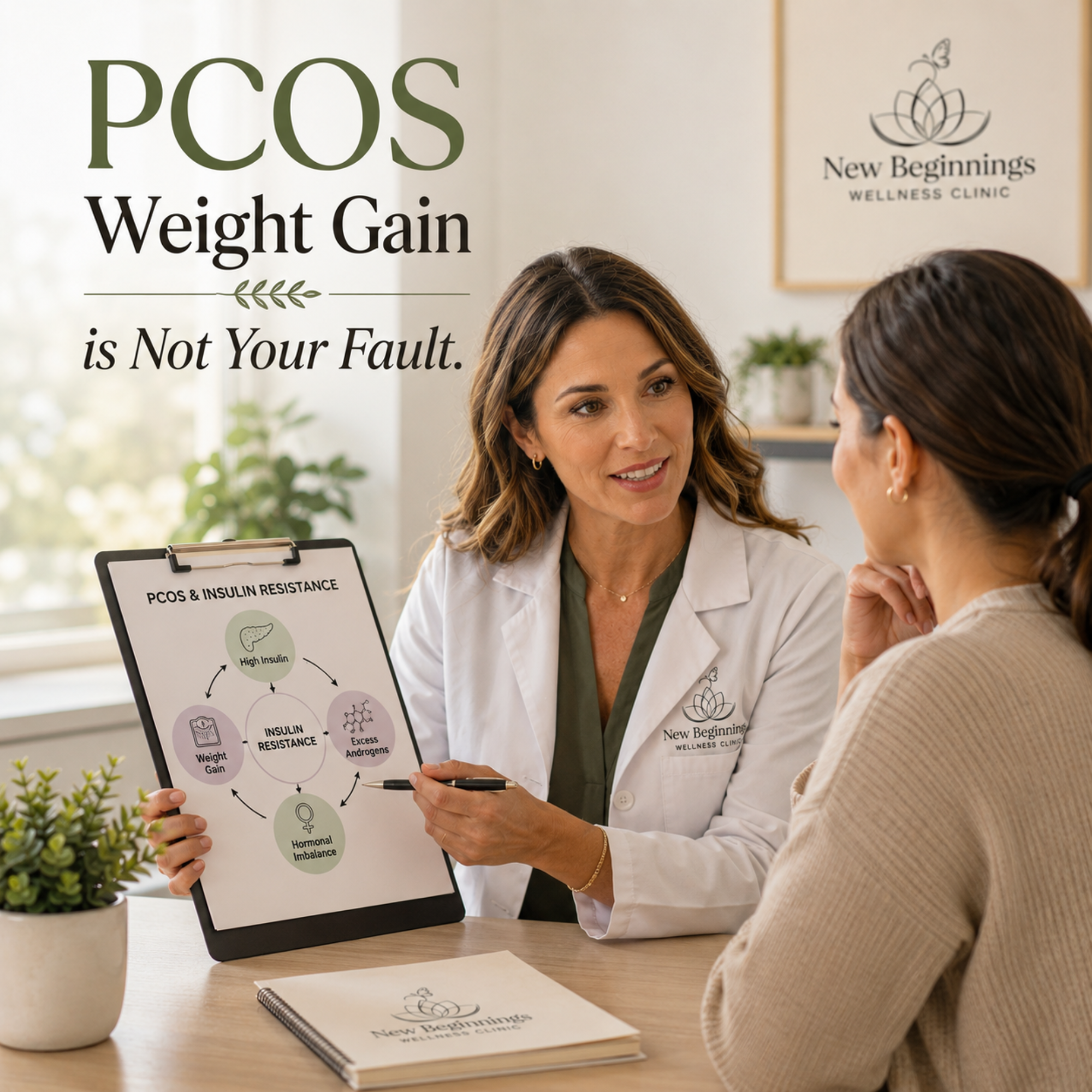
If you are living with Polycystic Ovary Syndrome (PCOS), stepping on the bathroom scale can feel like a heartbreaking, deeply unfair battle where your body actively fights against every healthy choice you make.
But before you blame your willpower, give up in frustration, or start yet another punishing, highly restrictive diet, you must understand that this stubborn weight gain is not a behavioral failure; it is a profound physiological issue rooted in severe insulin resistance.
At New Beginnings Wellness Clinic, we regularly consult with women who are utterly exhausted by the traditional medical system’s approach to their PCOS. Far too often, doctors deliver the diagnosis and immediately offer the most dismissive, backwards advice possible: “Just lose some weight, and your symptoms will improve.”
For a woman with PCOS, being told to “just lose weight” is like being told to climb a mountain while wearing a heavy backpack filled with rocks. Traditional doctors frequently fail to explain that the weight gain is not the cause of the syndrome; it is a direct symptom of a severely derailed metabolic and hormonal system. To finally move the scale, we have to stop treating the surface-level weight and start addressing the complex hormonal traffic jam occurring deep inside your cells.
The Insulin Resistance Trap
To understand why your body is stubbornly holding onto every ounce of fat, you have to understand insulin. When you eat carbohydrates, your digestive system breaks them down into glucose (sugar), which enters your bloodstream. Your pancreas responds by releasing insulin, a hormone whose primary job is to act like a key, unlocking your cells so the glucose can enter and be burned for energy.
In the vast majority of women with PCOS, the cells have become “insulin resistant.” The cells essentially change their locks. The pancreas knocks on the door with the insulin key, but the cells ignore it. Because the glucose cannot get into the cells, it remains trapped in the bloodstream.
Panicking, the body assumes it just didn’t send enough insulin to get the job done, so the pancreas pumps out even more insulin. You are now stuck in a state of hyperinsulinemia (chronically high insulin). Here is the critical problem: insulin is a primary fat-storage hormone. When insulin levels are constantly elevated, your body is completely locked out of fat-burning mode, and every excess calorie is efficiently shuttled directly into deep visceral fat storage.
The Androgen Connection: Why PCOS Changes Your Body Shape
Chronically high insulin does not just cause weight gain; it directly triggers your ovaries to overproduce androgens, such as testosterone.
While women need a healthy baseline of testosterone for energy and libido, an excessive amount of androgens creates the hallmark, highly distressing symptoms of PCOS: severe cystic acne, thinning hair on the scalp, and unwanted facial or body hair growth.
Furthermore, this excess testosterone completely shifts how and where your body stores fat. Instead of the typical female pattern of weight distribution (around the hips and thighs), the high androgens and high insulin force your body to store dangerous visceral fat specifically around your midsection, creating a thicker waistline and an “apple” body shape that is notoriously resistant to traditional exercise.
The Exhaustion and Cravings Cycle
If you feel like your cravings for sugar and carbohydrates are completely out of control, it is important to realize that this is a biological drive, not a lack of discipline.
Because your cells are resistant to insulin, they are literally starving for energy, even if you have just eaten a full meal. Your brain interprets this cellular starvation as an emergency and sends out overwhelming signals to consume quick energy (sugar and refined carbs).
When you give in to the craving, your blood sugar spikes, followed by a massive insulin dump, which rapidly crashes your blood sugar an hour later. This rollercoaster leaves you feeling jittery, “hangry,” and profoundly fatigued. You are trapped in a vicious cycle of metabolic chaos that drains your energy and sabotages your mood.
Why “Eat Less, Move More” Actively Fails PCOS Patients
When women with PCOS try to lose weight using standard “calories in, calories out” methods, they almost always hit a devastating wall. Severely restricting your calories places an immense amount of stress on the body.
Women with PCOS already suffer from chronic, low-grade systemic inflammation and highly reactive adrenal glands. When you drastically cut your food intake and push yourself through grueling, high-intensity cardio sessions, your body responds by flooding your system with cortisol (the stress hormone). High cortisol directly worsens insulin resistance and signals your body to cling to its visceral fat reserves to survive the perceived “famine.” You are working twice as hard to do double the damage to your metabolism.
Reversing the Cycle with Precision Wellness
You do not have to accept the weight gain, the exhaustion, or the frustrating symptoms of PCOS as your permanent reality. At New Beginnings Wellness Clinic, Amanda McDole and our clinical team utilize a compassionate, root-cause approach that works with your biology, not against it.
When you sit down with us for a consultation, we don’t just look at a standard lab panel. We dive deep into your fasting insulin levels, your comprehensive thyroid function, and your complete sex hormone profile to map out exactly where your metabolism is stalling.
Our customized treatment protocols address PCOS from multiple angles:
- Improving Insulin Sensitivity: We utilize targeted, medical-grade nutraceuticals (like specific forms of inositol, berberine, and magnesium) and, when appropriate, powerful medical weight loss tools like GLP-1 medications to reset your cellular response to insulin.
- Hormonal Balancing: By utilizing precision Bioidentical Hormone Replacement Therapy (BHRT) and targeted protocols to lower excess androgens, we help clear your skin, protect your hair, and shift your body out of chronic fat-storage mode.
- Metabolic Support: We may introduce specific Peptide Therapies to reduce systemic inflammation, encourage cellular repair, and protect your vital lean muscle mass while you lose stubborn fat.
Disclaimer: The medical information discussed in this article is intended for general informational and educational purposes only and should not replace personalized medical advice. Every patient is unique, and all treatments are customized to fit individual lab results, symptoms, and comprehensive health profiles.
Are you ready to stop fighting your body and finally address the root cause of your weight gain? Don’t let PCOS dictate your health and confidence for another day. Contact Amanda McDole and the compassionate, experienced team at New Beginnings Wellness Clinic. Call us at (419) 847-3458 or visit us online at nbwclinic.com to schedule your comprehensive lab review and personalized metabolic consultation.